
20 Most Common Pharmaceutical Additives with Examples
By Phartoonz
Updated 4 min read
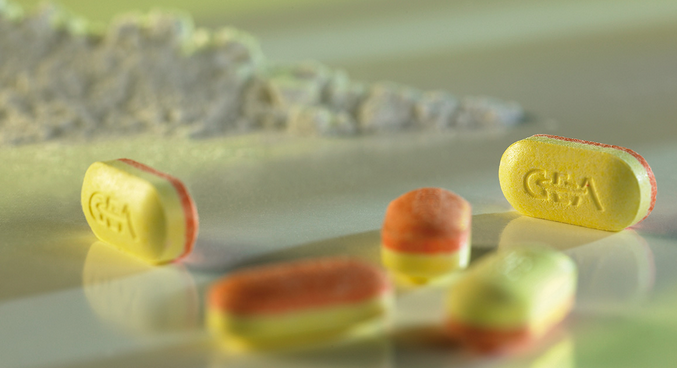
A pharmaceutical additive or an excipient is a substance that mixed with an active pharmaceutical ingredient for a specific purpose.
I will go through the most common types with examples:
1. Antioxidant :
It is an agent that prevent the oxidation process to the pharmaceutical preparation. Thus, avoid its deterioration.
Examples:
| Type | Water Soluble | Lipid Soluble |
| Examples |
|
|
2. Humectants:
Simply, related to humidity, so the basic function is to keep the preparation wet and avoid dryness like in ointment and creams.
Examples:
- Glycerin.
- Propylene glycol.
- Sorbitol.
3. Stiffening Agents:
Are used to increase the thickness of the pharmaceutical preparations as in an ointments.
Examples : White Wax, Yellow Wax and Paraffin.
4. Suspending Agents:
Are used to increase the viscosity of the vehicle to reduce the rate of sedimentation. Usually the drug is not soluble in the vehicle and a suspending agent is required. Drugs of that type often require the statement “Shake before Use”.
Examples : Agar, Gum tragacanth and Bentonite.
5. Flavoring Agents:
Are used to enhance the pharmaceutical preparation taste and odour.
Examples : usually volatile oils like Anise oil, cinnamon oil, Cocoa, Menthol and strawberry flavors.
6. Coloring Agents (Colorant):
Are used to add a color to liquid preparations.
Examples : Caramel.
7. Sequestering Agents (Chelating Agents):
Agents that are used to form stable complex with metals, they are used as stabilizers in cases of instability caused by metals especially in liquid pharmaceutical preparations.
Examples : EDTA ( Ethyele Diamine tetra acetic acid).
8. Anti-Adherent agents:
Usually used in tablet preparations to avoid the sticking of tablet ingredients.
Examples : Talc & Silicon Dioxide.
9. Polishing agents:
Usually used in tablet preparations to be more attractive.
Examples : White Wax & Carnauba Wax.
10. Emulsifying agents (emulgent):
They are agents that are soluble in both Fat & Water. have hydrophilic and lipophilic characters and used to enhance the stability of the emulsion avoiding the separation between the two phases. They are also known as surfactant or surface active agents.
Examples:
| Anionic | Non Ionic | Cationic |
|
Tweens and spans |
Benzalkonium chloride |
11. Solvent:
An agent that used to dissolve a pharmaceutical substance which might be hydrophilic or lipophilic substance.
Examples:
- Water of Injection.
- Sterile Water for Injection.
- Olive oil.
- Corn Oil.
- Purified Water.
- Glycerin.
- Mineral Oil.
12. Coating Agent:
Mainly used in tablet manufacturing, the main purpose for adding a coating agent is to protect the tablet and its drug components from external factors like Oxygen, humidity or to mask unpleasant odor or taste.
Types of Tablet Coating:
- Sugar coating: The Tablet to be break up in the stomach.
- Film coating: Thin film around the formed tablet and usually dissolves in the stomach.
- Enteric coating: The Tablet to be break up in the intestine.
Examples:
| Sugar Coating | Film Coating | Enteric Coating |
|
|
|
13. Adsorbent:
An agent that used to adsorb and bind with other agent onto its surface either physically or chemically.
Examples:
- Activated Charcoal. ( The most popular adsorbent)
- Powdered cellulose.
14. Preservatives:
Agents used to protect the pharmaceutical preparations usually liquids and semi-solids from deterioration by micro-organisms or fungi.
Examples:
| Antimicrobial | Anti-fungals |
|
|
15. Buffering Agents:
Agents that used to prevent the change of PH of the pharmaceutical preparations. Buffers are made with Acids or bases and their salts.
Examples:
- Potassium metaphosphate.
- Potassium phosphate Monobasic.
- Sodium acetate.
- Sodium citrate anhydrous and dehydrate.
16. Disintegrant:
Agents to make sure when the tablet in contact with the dissolving medium, they broke up into smaller particles. Thus, facilitating their dissolution. In simple words, agents that are responsible for tablet rupture.
Examples:
Starch, cellulose, crosses linked polyvinyl pyrrolidone, sodium starch glycolate, sodium carboxymethyl cellulose.
17. Binders:
Binders are responsible for the adhesion of the drug with the inactive ingredients in the tablet manufacturing.
There are two types of binders:
- Wet or Solution Binders: ex: Gelatin, cellulose, cellulose derivatives, starch, PVP and Polyethylene glycol.
- Dry Binders: Cellulose and Methyl Cellulose.
18. Diluents/ Fillers :
Their function is to increase the volume of the final product therefor it is easy for patients to handle it. Fillers have to be inert, compatible, compact-able and tasteless or tasteful.
Examples:
Lactose, sucrose, glucose, mannitol, sorbitol, calcium phosphate, calcium carbonate and cellulose.
19. Glidants :
Agents that are used to enhance the flow ability of the powder or the granules.
Examples:
Silica derivatives, talc and corn starch.
20. Lubricants :
To ensure that tablet formation and ejection can occur with low friction between the solid and the die wall. So, the tablet is intact.
Examples:
Calcium Stearate, Zinc Stearate and Magnesium Stearate.
Tagged
Keep reading

Pharmaceutical Substances knowledgebase
Long time away from Phartoonz :ermm: due to my personal duties & other projects that I work on. I want to share with all of you a beta version of a pharmaceutical substances database. It has 8000+ drugs & pharmaceutical related substances categorized and formatted for super easy basic data access. Please find it…
May 8, 2016
Top 10 pharmaceutical products in 2023 with MoA – ranked!
This following list has the top 10 drugs that have the potential to be game-changers in the field of medicine and provide new hope for patients with serious diseases. They are ranked by the projected USD sales in billions. Drug Company Disease Projected sales (billion USD) Mechanism of action Keytruda Merck & Co. Cancer 24…
Aug 28, 2023
Top 10 Pharmaceutical companies in 2017
Pharmaceutical companies make a huge business, a lot of competition there along with multiple acquisitions and merge between many pharmaceutical companies, down there a video with the top 10 pharmaceutical companies in the beginning of 2017 as a result of their 2016 revenues. The recent rank of top 10 pharmaceutical companies by revenues has a…
May 3, 2017
Food Safety at emergency like power outage
This is how to keep food safe during emergency like power outage. Follow the following steps to help keep the food safe as longer as possible and avoid food loss or getting ill because of unsafe damaged food. Source: foodsafety.gov
Feb 12, 2017
2 comments
From the original article · comments are closed
Tyrao
Thank you well explained
Phartoonz
Welcome 🙂