
Pharmacology basics and definitions – Easy [Part 1]
By Phartoonz
Updated 4 min read

Key takeaways
Pharmacology basics part 1: what pharmacology and drugs are, its subdivisions, and the pharmacokinetic steps of absorption and distribution.
When you have headache , you take an analgesic OTC like ibuprofen to treat the pain but what is behind the scene !? the process of treating headache ?
The interaction between a chemical like ibuprofen and your body as a living system is the definition of pharmacology. The drug is a chemical substance that interacts with a living system. So,
Pharmacology : The study of the interaction between chemicals and living systems.
Drug : is a chemical substance that interact with a living system to give a response .
The major subdivisions of pharmacology :
1. Pharmacokinetics : that is what is your body do to the drug.
2. Pharmacodynamics : That is what the drug do to your body. ( D Mnemonics :biggrin: )
3. Pharmacotherapeutics : Related to the use of drug to diagnose or treat or prevent the disease.
4. Toxicology : The toxic or undesirable effects of the drug or a chemical substance.
Lets back to the headache story and using OTC ibuprofen to manage your headache :
According to the pharmackinetic definitions , what is happened to the ibuprofen when ingested to treat the headache ? What does your body do to the ibuprofen ?
- Absorption : it means rate and extent of the drug to move from site of administration.
- Distribution : when the drug leaves the blood stream and enters between the cells or the cells of the tissues.
- Biotransformation : The process which include modifying the drug through phase 1 and phase 2 to allow the elimination of the drug from the body. However some drugs “Prodrug” is activated through this process.
- Excretion : The process by which the drug is removed from your body.
Lets walk through each definition of Pharmacokinetics :w00t: :
1. Absorption :
As we defined it the rate and extent of the drug to move from the site of administration , so what are the sites of body administration ??
- Alimentary ( Oral , Buccal ,Sub-lingual & Rectal ).
- Parenteral ( Intravenous , Intramuscular , Subcutaneous & Intrathecal )
- Inhalation.
- Topical.
- Transdermal.
- Subcutaneous.
Some drugs has a high rate of absorption some other poorly absorbed , this determined by many factors like : ( Factors affecting the absorption of the drug )
- Route of administration type : for example Intravenous route is the most effective one (see this toon)
- Blood flow : As it increase , the absorption rate increases.
- Surface area : As it increase , the absorption rate increases too.
- Solubility of the drug : the hydrophilic part ( water soluble ) to lipophilic part ( lipid soluble ) ratio will determine the rate of absorption. This called Partition Coefficient
- Drug-Drug interactions : It depends on the types of drugs they may enhance or decrease or inhibit each others.
- PH : the acidity or alkalinity of the drug may affect its absorption.
After we consider all the previous factors , the portion or the fraction of the drug that reaches its site of action to exert a biological effect for ex: Analgesic effect is called bioavailability.
So if the WHOLE drug reaches to the site of action it means it has 100% bioavailabilty, the only route which give 100% bioavailability is the Intravenous route 😎 as 100% of the drug injected into the blood stream, other routes give less than 100% bioavailability.
Thers is a cases in which > than 90% of the drug doesn’t reach its site of action , thats means it is eliminated or inactivated before reaching its site of action , this called First Pass Metabolism.
First Pass metabolism : Biotransformation occurs to the drug before reaching its site of action , mainly occurs in the liver ex: Nitroglycerin.
2. Distribution :
The process by which the drug leaves the blood stream and enters the tissue. HOW ?
- Passive diffusion : the drug moves from area of high concentration to the area of low concentration.
- Active Transport : As it is active you must pay for it ! it is against the concentration gradient and the energy (Payment ) come from the dephosphorylation of ATP.
- Special carrier transport ( Helper 😆 ) :like passive diffusion but with a carrier like proteins.
So do all drugs distribute to the same extent ? or all organs allows drugs to enter to their cells ?
No , there are factors affecting drug distribution :
- Blood flow.
- Capillary permeability : it depends on the organ for example the brain has blood brain barrier which is tight and doesn’t allow big molecules to pass , but the junctions between the cells in liver is wide which allow big molecules to pass.
- Binding to plasma proteins : like albumin , the higher binding rate , the lower access to the cellular compartments.
- Drug structure : Small drug molecules with high lipophilic properties is likely to pass easily more than large molecules or water soluble molecules.
UPDATE : Part 2
To be continued …
Keep reading
The “ABCDE” uses of Heparin – Mnemonic
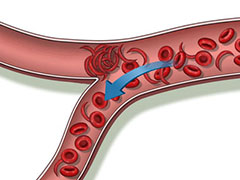
What is Heparin? Heparin is a drug used to prevent clots in the blood vessels. Simply a blood thinner. Uses of Heparin : A: Acute coronary syndrome. B: Bypass Surgery. C: Cardiac Thrombi D: Deep Vein Thrombosis (DVT) E: Embolism ABCDE uses of Heparin.
Sep 28, 2015
How Cholesterol blocks your body arteries [Video]
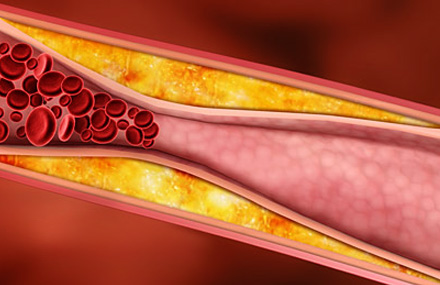
Hey , A short video produced by AZ!, It shows how cholesterol clogs the arteries through different stages leading to heart attack. Enjoy the science ..
May 23, 2015
Selectivity of Beta blockers
Beta blockers prevent catecholamines ( Epinephrine & Norepinephrine ) from binding to beta receptors. Mainly , 3 types of beta receptors have been internationally identified : β1 , β2 , β3 ” Beta receptors will be illustrated in other coming posts “ ~ First generation of β blockers ~ Non-selective =…
Dec 15, 2010
HIV (AIDS) illustrated by video
HIV stands for human immunodeficiency virus. AIDS stands for acquired immune deficiency syndrome. HIV is very similar to a virus called SIV (simian immunodeficiency virus), which is found in monkeys. The main ways HIV can be passed on to another human are: during unprotected sex, by using used injecting equipment, and from a mother to the fetus during pregnancy, birth or through…
Oct 17, 2015