
Commonly used pharmaceutical Antidotes
By Phartoonz
Updated 3 min read
This reminds me about that episode of Sherlock show when he was confused about two tablets, one is poison and the other is not! Actually, every single drug or tablet has both effects, the poisonous effect at the wrong dose and the remedy effect at the correct dose!

So, I am going to list the commonly used antidotes in pharmaceutical industry , trying to keep the list updated as possible, let me know if I missed one or you want to add an antidote, contact me!
N.B : The data included below in the table is for educational purposes! the full and complete urgent medical advices should be obtained from your local poison control center, Click here!
| Toxicity Of | Antidote | Adult Dose | Pedia Dose |
| Acetaminophen / Paracetamol | N-Acetyl Cysteine | 140 mg/kg as loading dose followed by 70 mg/kg every 4 hours for 17 doses orally | Similar to the Adult dose! |
| Arsenic | Dimercaprol | 10 mg/kg orally three times a day | Similar to the Adult dose! |
| B-Blockers | Glucagon | 5-10 mg as IV bolus dose followed by 5 – 10 mg/hr IV infusion titrated to effect | 0.15 mg as IV bolus dose followed by 0.1 mg/hr IV infusion titrated to effect |
| Carbamates | Atropine | 2-4 mg IV as bolus ; repeat doses titrated to effect | 1 mg/kg IV as bolus ; repeat doses titrated to effect |
| Digoxin | Digoxin immune antibody fragment | See leaflet instructions! | See leaflet instructions! |
| Opiods | Naloxone | 0.2 – 4 mg IV titrated to effect | Similar to adult dose! |
| Salicylate ex: Aspirin | Sodium Bicarbonates | use of intermittent boluses of 1-2 mEq/kg titrated to clinical effect | Check insert leaflet! |
| Warfarin | 1. Fresh Frozen Plasma | FFP for life threatening hemorrhage | Same as adult! |
| 2. Vitamin K1 | 10 – 50 mg slow IV infusion; SC or orally. | 0.6 mg/kg slow IV infusion SC or orally. | |
| Isoniazid (INH) | Pyridoxine Vit. B6 | 1 g per gram INH ingested or 75 mg/kg IV if unknown and not exceed 5 g | 1 g per gram INH ingested or 75 mg/kg IV if unknown and not exceed 5 g |
| Iron | Deferoxamine | 5-15 mg/kg/hr IV infusion titrated to effect | Similar to Adult dose! |
| Cyanide | Cyanide Antidote: | ||
| 1. Sodium nitrate 3% | 300 mg slow IV infusion | 0.15-0.33 mL/kg to maximum 300mg slow IV infusion | |
| 2. Sodium Thiosulfate | 12.5 g IV infusion | 400 mg/kg up to 12.5 g IV infusion | |
| ca channel blockers | |||
| Calcium chloride 10% | 10 – 20 mL IV bolus; repeat doses and IV infusions common | 0.1 – 0.2 mL/kg IV bolus; repeat doses and IV infusions common | |
| Glucagon | 5-10 mg as IV bolus dose followed by 5 – 10 mg/hr IV | 0.15 mg as IV bolus dose followed by 0.1 mg/hr IV infusion titrated to effect | |
| Benzodiazepines | Flumazenil | 0.2 mg IV bolus titrated to effect or total dose of 3 mg | 0.01 mg/kg IV bolus titrated to effect or total dose of 1-3 mg |
| Methemoglobinemia | Methylene Blue | 1-2 mg/kg slow IV infusion; repeat doses are common | Similar to adult dose! |
| Anticholinergic compounds | Physostigmine Salicylate | 1-2 mg slow IV infusion over 3-5 min titrated to effect | 0.02 mg/kg slow IV infusion over 3-5 min. titrated to effect |
| Ethylene Glycol / Methanol | |||
| Ethanol 10% | Loading dose: 10 mL/Kg IV or Orally; Maintenance dose: 1-2 mL/kg/hr IV infusion or orally. | Similar to adult regimen! | |
| Fomepizole | 15 mg/kg IV bolus; repeated smaller doses may be necessary | Similar to adult regimen! | |
| Organophosphates compounds | |||
| Atropine | 2-4 mg IV as bolus ; repeat doses titrated to effect | 0.1 mg/kg IV as bolus ; repeat doses titrated to effect | |
| Pralidoxime HCL | 1-2 g slow IV infusion followed by 500 mg/hr continuous infusion or 1 g every 4 hrs | 20-40 mg/kg slow IV infusion followed 5-10 mg/kg/h continuous infusion or 20 mg/kg every 4 hrs. |
Thats it! I will keep it updated!
Keep reading
Pharmaceutical & Medical Abbreviations (Most common )
The most common medical abbreviations: Download a PDF version here The most common medical abbreviations[phartoonz.com] Abbreviation Meaning ABGs arterial blood gases AIDS acquired immunodeficiency syndrome ALT alanine aminotransferase (previously SGPT) APTT activated partial thromboplastin time ARDS adult respiratory distress syndrome AST aspartate aminotransferase (previously SGOT) AV atrioventricular bid twice daily bpm beats per minute BP…
Feb 20, 2015
Drug suffixes have a clue about the drug class
Drugs are classified into groups, but as a pharmacist you could know what is the class of certain drug as long as the drug has a very common suffix. The most popular example is -statin , as long as the drug name has the suffix statin, it is immediately known as cholesterol lowering agent. So,…
Apr 9, 2017
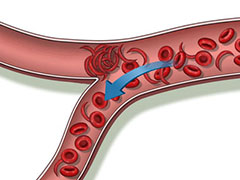
The “ABCDE” uses of Heparin – Mnemonic
What is Heparin? Heparin is a drug used to prevent clots in the blood vessels. Simply a blood thinner. Uses of Heparin : A: Acute coronary syndrome. B: Bypass Surgery. C: Cardiac Thrombi D: Deep Vein Thrombosis (DVT) E: Embolism ABCDE uses of Heparin.
Sep 28, 2015
What do you need to know about insulin formulations ?
There are three main characteristics of insulin : ** update: an insulin comparison chart article written in 2017 with downloadable file : Click Here Onset which is the length of time before insulin reaches the bloodstream and begins its intended action. Peak time which is the time during which insulin is at its maximum strength…
Aug 15, 2015