
Pharmaceutical & Medical Abbreviations (Most common )
By Phartoonz
Updated 2 min read
The most common medical abbreviations:
Download a PDF version here
The most common medical abbreviations[phartoonz.com]
| Abbreviation | Meaning |
|---|---|
| ABGs | arterial blood gases |
| AIDS | acquired immunodeficiency syndrome |
| ALT | alanine aminotransferase (previously SGPT) |
| APTT | activated partial thromboplastin time |
| ARDS | adult respiratory distress syndrome |
| AST | aspartate aminotransferase (previously SGOT) |
| AV | atrioventricular |
| bid | twice daily |
| bpm | beats per minute |
| BP | blood pressure |
| BSA | body surface area |
| BUN | blood urea nitrogen |
| °C | degrees Celsius |
| Cal | Calorie (kilocalorie) |
| CBC | complete blood count |
| cc | cubic centimeter |
| CDC | Centers for Disease Control and Prevention |
| CHF | congestive heart failure |
| CN | cranial nerve |
| CNS | central nervous system |
| COPD | chronic obstructive pulmonary disease |
| CPK | creatine phosphokinase |
| CSF | cerebrospinal fluid |
| CT | computed tomography |
| cu | cubic |
| Cu | copper |
| CV | cardiovascular |
| CVP | central venous pressure |
| D5W | 5\% Dextrose in Water |
| D10W | 10\% Dextrose in Water |
| DERM | dermatologic |
| DIC | disseminated intravascular coagulation |
| dl | deciliter (100 ml) |
| DNA | deoxyribonucleic acid |
| ECG | electrocardiogram |
| EDTA | ethylenediamine tetraacetic acid |
| EEG | electroencephalogram |
| EENT | eye &ear& nose&throat |
| ELISA | enzyme-linked immunosorbent assay |
| EMIT | enzyme-multiplied immunoassay test |
| °F | degrees Fahrenheit |
| FDA | Food and DrugAdministration |
| G-6-PD | glucose-6-phosphate dehydrogenase |
| GABA | gamma-aminobutyric acid |
| GI | gastrointestinal |
| gtt | drops |
| GU | genitourinary |
| Hct | hematocrit |
| HDL | high-density lipoprotein |
| HEMA | hematologic |
| HEPA | hepatic |
| Hgb | hemoglobin |
| HIV | human immunodeficiency virus |
| hr | hour |
| I&O | intake and output |
| IM | intramuscular |
| IND | investigational new drug |
| IOP | intraocular pressure |
| IU | international units |
| IV | intravenous |
| kg | kilogram |
| L | liter |
| LDH | lactate dehydrogenase |
| LDL | low-density lipoprotein |
| LOC | level of consciousness |
| m | meter |
| m2 | square meter |
| MAO | monoamine oxidase |
| mcg | microgram |
| mEq | milliequivalent |
| META | metabolic |
| mg | milligram |
| MI | myocardial infarction |
| min | minute |
| ml | milliliter |
| mm | millimeter |
| mm3 | cubic millimeter |
| mm Hg | millimeters of mercury |
| mo | month |
| mOsm | milliosmole |
| MRI | magnetic resonance imaging |
| npo | nothing by mouth |
| NSAID | nonsteroidal anti-inflammatory drug |
| ng | nanogram |
| NK | natural killer (cells) |
| otc | over-the-counter (nonprescription) |
| oz | ounce |
| PABA | para-aminobenzoic acid |
| PAC | premature atrial contraction |
| pH | negative log of hydrogen ion concentration |
| PMS | premenstrual syndrome |
| pCO2 | carbon dioxide pressure (tension) |
| pO2 | oxygen pressure (tension) |
| PO | by mouth |
| ppm | parts per million |
| prn | as needed |
| PR | per rectum |
| pt | pint |
| PT | prothrombin time |
| PTT | partial thromboplastin time |
| PVC | premature ventricular contraction |
| q | every |
| qd | every day |
| q hr | every hour |
| qid | four times daily |
| qod | every other day |
| q 2 hr | every 2 hours |
| qt | quart |
| RBC | red blood cell count |
| RDA | Recommended Dietary Allowance |
| RDS | respiratory distress syndrome |
| RNA | ribonucleic acid |
| SC | subcutaneous |
| sec | second |
| SIADH | syndrome of inappropriate secretion of antidiuretic hormone |
| SL | sublingual |
| SLE | systemic lupus erythematosus |
| SPF | sun protection factor |
| STD | sexually transmitted disease |
| tid | three times daily |
| Tbsp | tablespoon |
| TPN | total parenteral nutrition |
| TSH | thyroid-stimulating hormone |
| tsp | teaspoon |
| U | unit |
| UTI | urinary tract infection |
| VHDL | very high density lipoprotein |
| VLDL | very low density lipoprotein |
| WBC | white blood cell count |
| WHO | World Health Organization |
| wk | week |
| yr | year |
I will keep the list updated , contact me to add more abbreviations
source : Google , AZ drug facts.
Keep reading
Commonly used pharmaceutical Antidotes
This reminds me about that episode of Sherlock show when he was confused about two tablets, one is poison and the other is not! Actually, every single drug or tablet has both effects, the poisonous effect at the wrong dose and the remedy effect at the correct dose! So, I am going to list…
Aug 13, 2016
Drug suffixes have a clue about the drug class
Drugs are classified into groups, but as a pharmacist you could know what is the class of certain drug as long as the drug has a very common suffix. The most popular example is -statin , as long as the drug name has the suffix statin, it is immediately known as cholesterol lowering agent. So,…
Apr 9, 2017
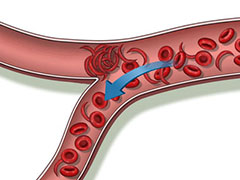
The “ABCDE” uses of Heparin – Mnemonic
What is Heparin? Heparin is a drug used to prevent clots in the blood vessels. Simply a blood thinner. Uses of Heparin : A: Acute coronary syndrome. B: Bypass Surgery. C: Cardiac Thrombi D: Deep Vein Thrombosis (DVT) E: Embolism ABCDE uses of Heparin.
Sep 28, 2015
What do you need to know about insulin formulations ?
There are three main characteristics of insulin : ** update: an insulin comparison chart article written in 2017 with downloadable file : Click Here Onset which is the length of time before insulin reaches the bloodstream and begins its intended action. Peak time which is the time during which insulin is at its maximum strength…
Aug 15, 2015